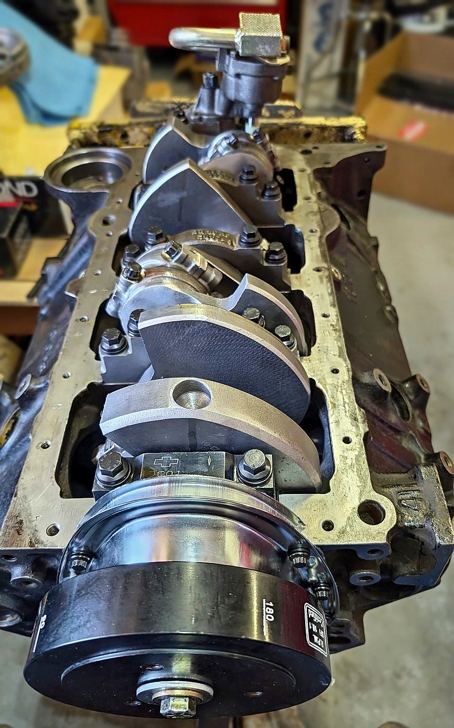
Measure bearing clearance
- Rods · target
- .0025″
- Rods · window
- .0020–.0030″
- Mains
- .0020–.0025″
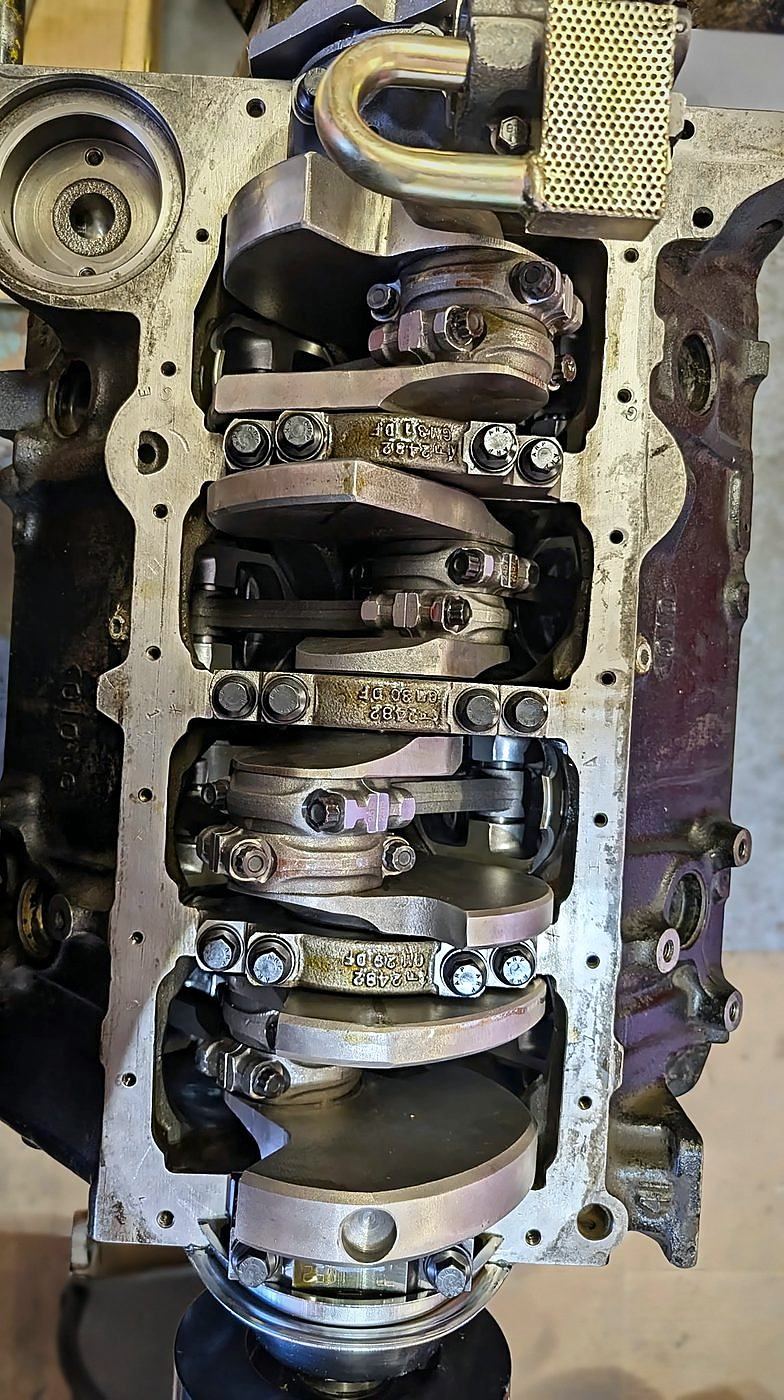
Two numbers. One subtraction. Write both on the part.
Bearing ID minus journal OD. The space left over is where the oil lives.
The rods
- Rod in a vise
Padded, smooth jaws. Cap bolts up.
- Bearing in, cap torqued
To ARP’s spec on the package.
- Snap gauge the bore
Write the reading on the rod.
- Mic the journal
A 2–3″ micrometer.
- Subtract
Bearing ID minus journal OD.
Rod oil clearance
inchesTargetInside a .0020–.0030″ window.
- Rods · window
- .0020–.0030Inside this
- Mains
- .0020–.0025Same method
- Oil can’t get in
- Metal touches metal
- Bearing wears through
Ruined bearing. Scored crank.
- Oil fills the space
- Crank rides on oil
- Metal never touches
Lives.
Call me if you don’t have a number that fits that tolerance and we’ll talk about what your next step is.
Jim Draper
- Stage
- Out of the window
The mains
Same process. Bearings in the block, with the journal number written on the back of each bearing.
What Jim names for it
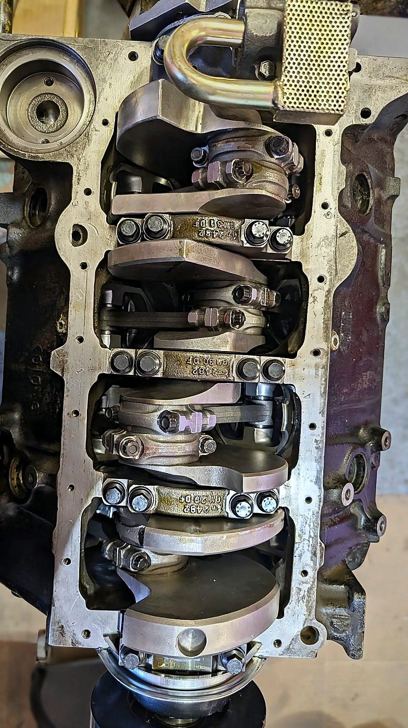
Jim only recommends and uses King HP bearings.
AmazonKing MB557HP (STD)Standard size unless the crank is ground.Jim uses nothing but ARP; order rods with ARP bolts.
SummitARP 134-6003Large-journal 3/8″ rods.Same King HP family as the mains; Jim's only bearing brand.
AmazonKing CR807HPN (STD)Large journal. Standard size unless the crank is ground.Jim snap-gauges each rod bore with the bearing in and cap torqued.
AmazonAccusize 6pcMeasure each journal; clearance is bearing ID minus journal OD.
AmazonMitutoyo 103-217ARP's torque spec on the package assumes ARP's own lube.
SummitARP 100-9909